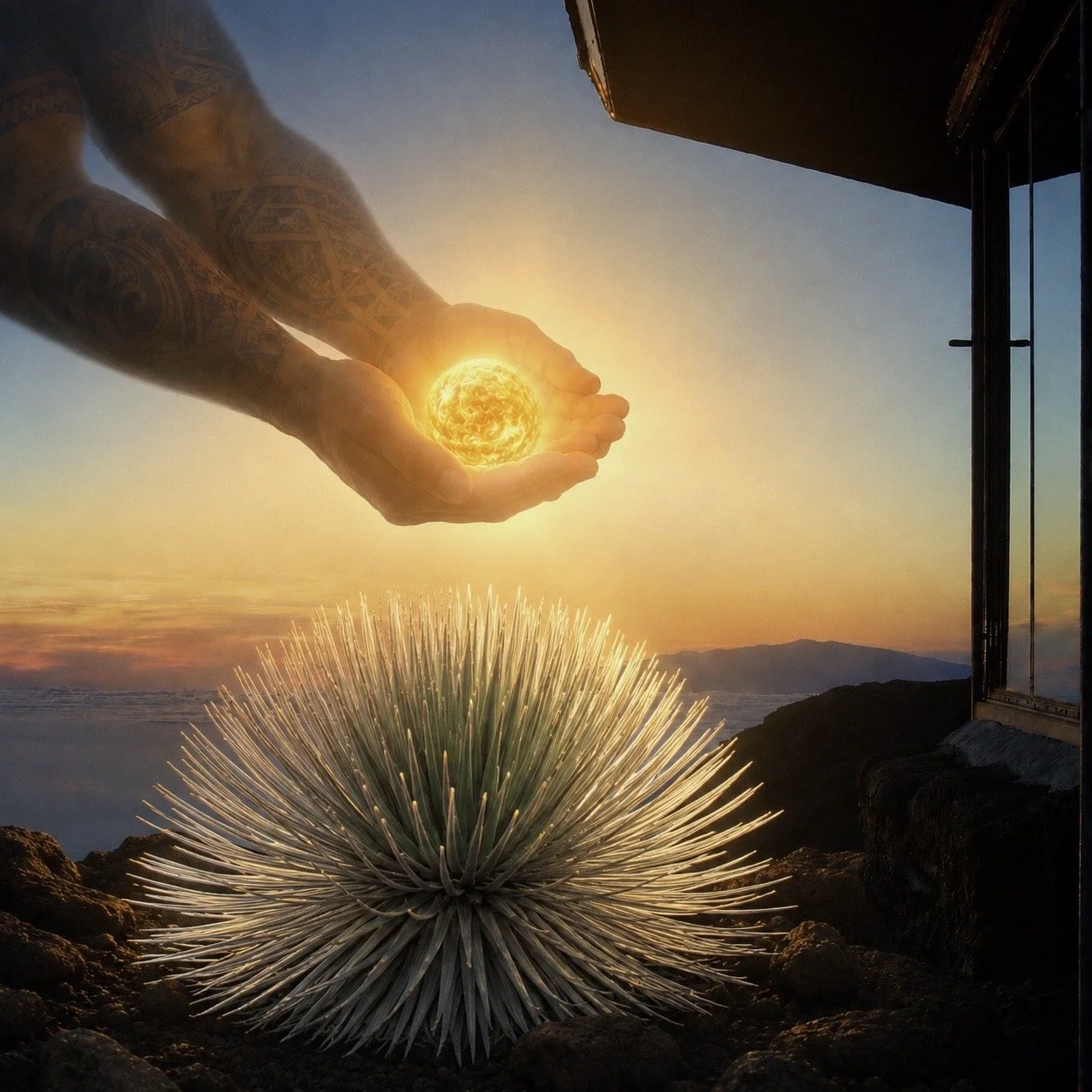
Long before dawn, we began the twisting drive up Haleakalā.
You have to arrive before sunrise, which sounds simple until you remember just how far up you are going—and how cold the top of a tropical island can be. Breath-in-the-air cold. Those who hadn’t brought enough clothes shuffled and stamped their feet with the rest of us outside the little shelter.
In the darkness, there was nothing yet to see.
We had heard the stories. We knew clouds could swallow the whole thing. So after that long climb, there was nothing to do but wait and hope we had been given a clear morning.
Then, almost imperceptibly, people began to appear.
First faint outlines. A shoulder. A face. The person standing beside you.
And somehow everyone seemed to notice at once. The shuffling stopped. We turned toward the horizon.
It was going to be clear.
The darkness opened, and suddenly I understood where I was. Clouds lay below us. Far beneath them was the ocean, and in the distance, the Big Island of Hawaiʻi.
We were standing on top of the world.
Then the sun came.
For a moment it felt as though we had reached the House of the Sun itself—that Maui had lassoed it once again and was offering it to all of us that morning. Its first light reached across the crater and lovingly found the silversword, a plant that belongs to this extraordinary place and almost nowhere else on Earth.
And then the morning chant began.
E Ala E.
Arise. Awaken.
The words floated out over Haleakalā as darkness became light.
I don’t remember thinking about photographs then. I remember feeling that I had somehow been allowed to witness something much older than any of us standing there.
A blessed morning on what felt like the first day of the world.