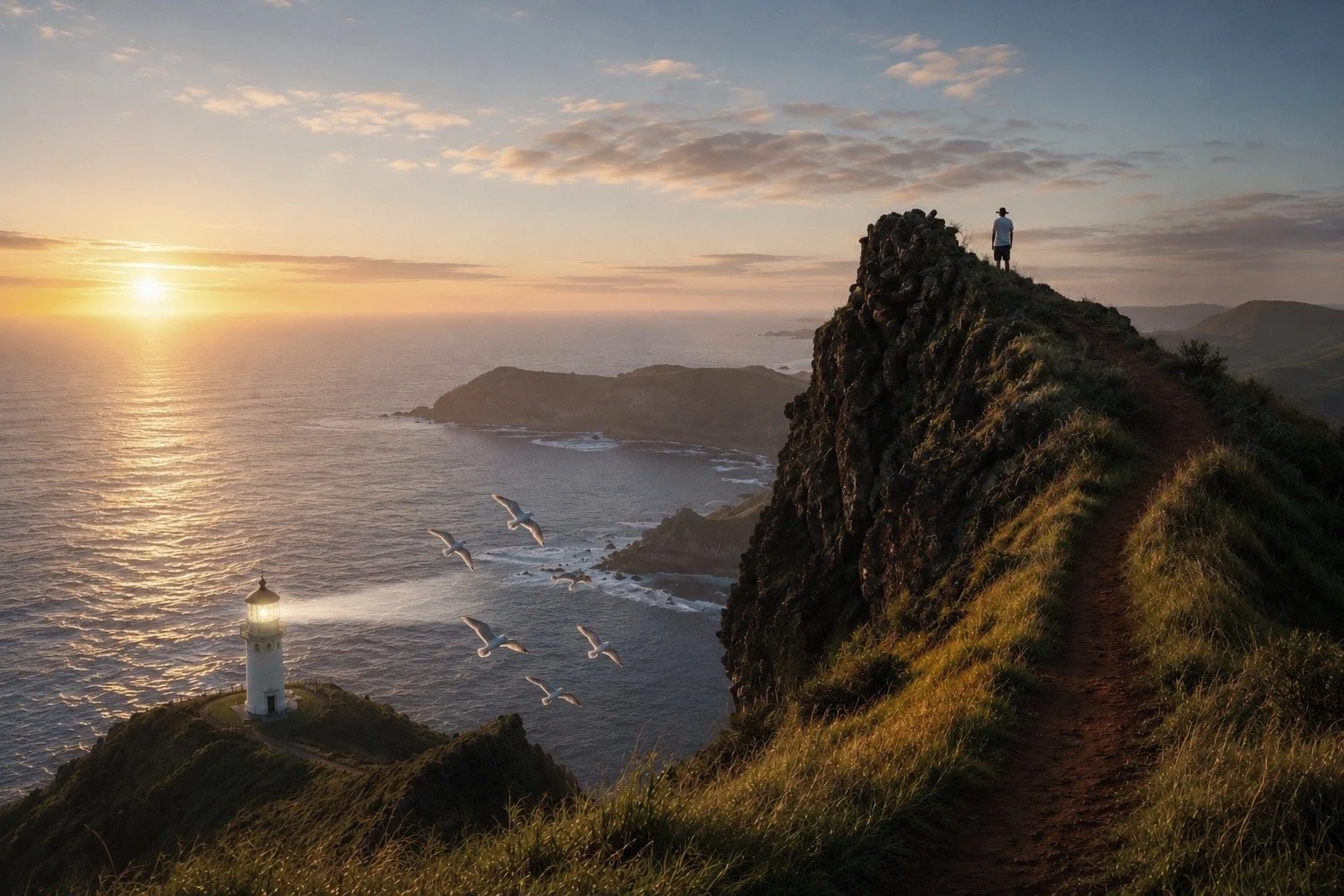
I started out early. I needed to be there, set up and waiting before the sun.
The drive was dark, winding through tropical vegetation until my headlights finally picked up the red-dirt track climbing through tall green grass.
I parked near the top and stepped out into the trade winds.
When I turned and looked down toward the point, the lighthouse was solemnly making its rounds. Each sweep of its beam sent a brief blaze across the grass before disappearing again into darkness.
I made my way out to the point, set up my tripod and waited.
Salt air. The scent of tropical flowers. The soft wind.
And no one else.
For that little piece of morning, I was the only person in paradise, and I reveled in it.
Then the sun began to rise.
It was every bit as magical as I had hoped, and soon I was busy photographing. But as the sun moved around a slight outcropping and began warming the cliffs, something happened that I hadn’t expected.
The sky came alive.
Great frigatebirds, Laysan albatrosses, tropicbirds, red-footed boobies, nēnē, shearwaters—all beginning their morning, circling above the refuge before heading out toward the sea.
I had come for a sunrise.
Instead, I had been allowed to watch an entire world wake up.
Eventually the extraordinary softened into morning. The sun was up. The birds were beginning their day. I started packing my equipment.
Then, from behind a bush:
SNORT.
I whipped around.
A horse lifted his head.
Someone had tethered him there to graze, and apparently he’d been lying quietly in the darkness the entire time. It was probably lucky I hadn’t stumbled over him on my way in.
He looked at me.
I looked at him.
And his expression seemed to say:
What in the heck are you doing here at this time of day?
I had thought I was alone in paradise.
Apparently I had company all along.